
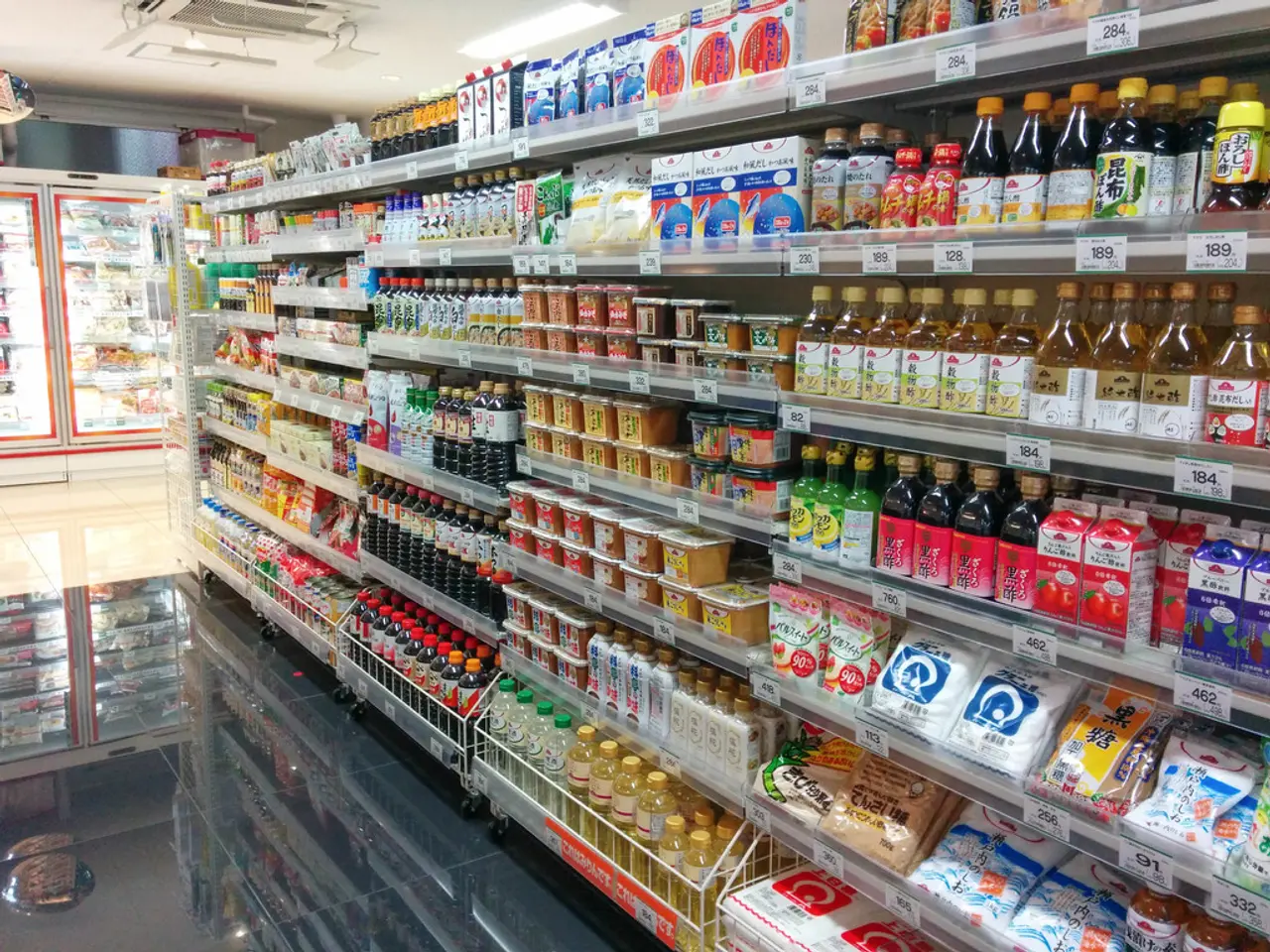
Shopping trends in Canada showing signs of decline, as indicated by CEO of Metro
Metro Inc., one of Canada's largest grocery retailers, has reported a third-quarter profit of $323 million, marking an increase from $296.2 million in the same quarter last year. However, the company's CEO, Eric La Flèche, has acknowledged a deceleration in the "Buy Canadian" movement at Metro Inc.
The initial surge in Canadian product sales was driven by trade tensions and tariff impositions, encouraging consumers to choose domestic products over U.S. imports. However, according to La Flèche, the pace of growth is slowing down compared to early 2025 when the movement gained momentum.
The tariffs between the U.S. and Canada, including counter-tariffs introduced earlier in 2025, have contributed to rising food prices. These tariffs have added inflationary pressure on food prices, which affects consumer behavior by increasing costs at the checkout despite the ongoing interest in local products.
Suppliers have had to request price increases for around 3,000 products supplied to grocers like Metro Inc. due to these tariffs. Some suppliers initially delayed passing costs on, but after Canada implemented counter-tariffs in March 2025, price increases became more widespread, influencing consumer purchasing behavior.
Despite the slowing growth in Canadian product sales, Metro Inc. has reported positive results in other areas. Pharmacy same-store sales were up 5.5 percent, while food same-store sales were up 1.9 percent. There was a 4 percent increase in front-store sales, primarily driven by over-the-counter products, cosmetics, and health and beauty.
On an adjusted basis, Metro Inc. earned $1.52 per diluted share in its latest quarter, up from $1.35 per diluted share in the same quarter last year. Sales for the quarter totalled $6.87 billion, up from $6.65 billion in the same quarter last year.
RBC analyst Irene Nattel said the results were "solid and consistent" with expectations. Nattel noted Metro's track record "of delivering visible, predictable, consistent results that underpins valuation, and Q3 results continue that trend."
Nattel also believes that cash-strapped consumers are moderating food away from home and focusing on value in everyday household purchases. This shift in consumer behavior could continue to impact Metro Inc.'s sales, particularly in the food sector.
Metro has invested nearly $1 billion in modernizing its supply chains in Quebec and Ontario. The company's focus on realizing efficiencies from these investments is evident in its latest quarterly results.
Metro's stock price dropped more than six percent Wednesday afternoon to trade around $98.86 on the Toronto Stock Exchange. Despite the dip, the company's consistent results and strategic investments suggest a strong outlook for the future.
[1] Source: The Canadian Press, Aug. 13, 2025.
Read also:
- Intensified farm machinery emissions posing challenges to China's net-zero targets
- EU Fuel Ban Alerts Mercedes Boss of Potential Crisis
- Nuclear plant revitalized: Artificial intelligence-led demand breathes life into the Great Lakes nuclear facility
- International finance institutions, EBRD, EIB, and SEB, offer €84.8 million in loans for solar energy projects within Latvia.