
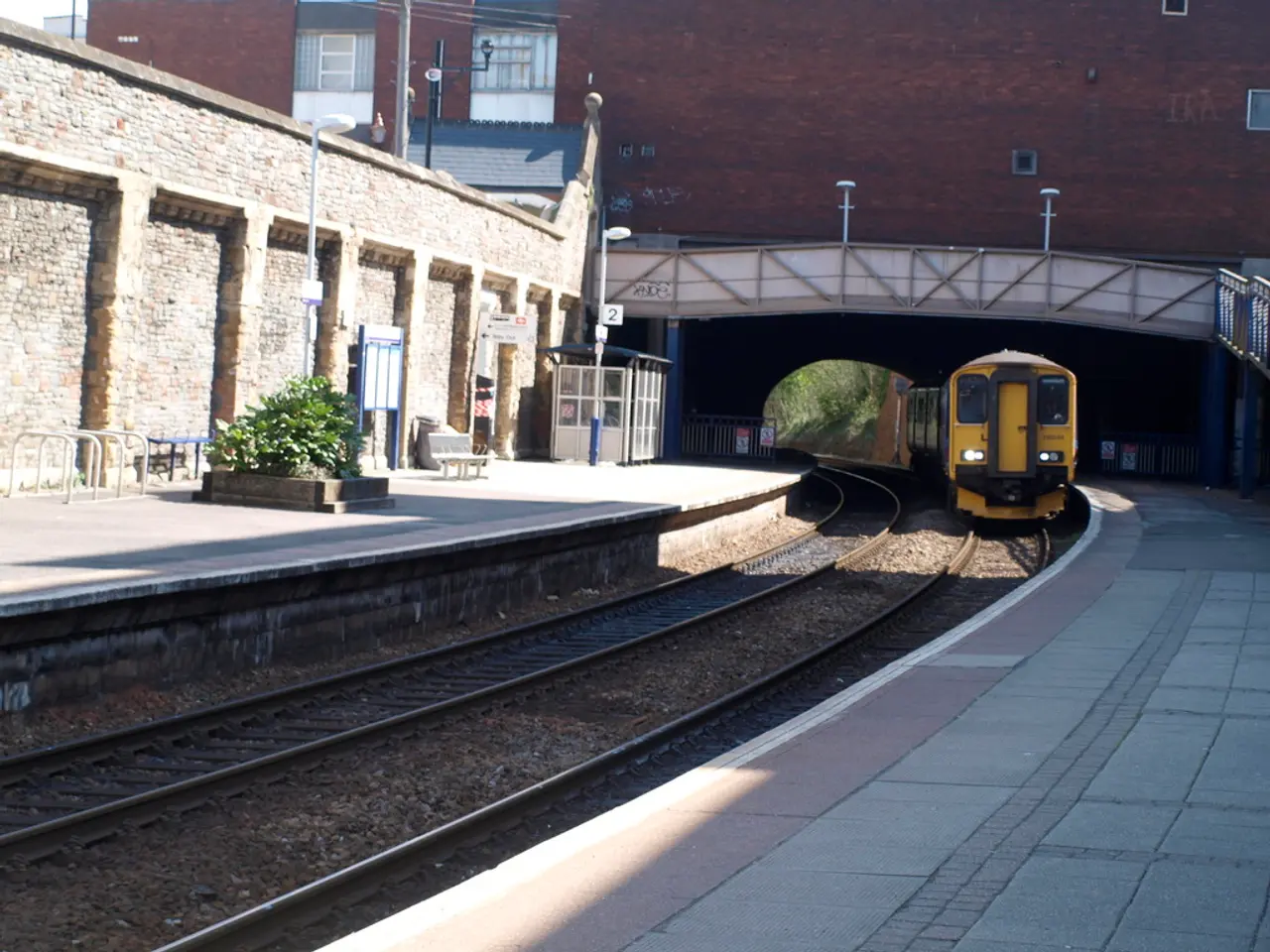
Romanian trains consistently travel at a moderate speed of 44 kilometers per hour, according to statements from unions, due to insufficient investments.
In a press release published on Wednesday, July 23, Romanian railway unions expressed their concerns regarding the government's plans to cut costs for the national railway operator, CFR Calatori (CFR). The unions did not specify what specific government plans they are criticizing, but their statement comes after Deputy Prime Minister Dragos Anastasiu's statement about the losses generated by state-owned companies.
The unions argue that insufficient funds have never been allocated for the purchase of new rolling stock, locomotives, and carriages, leading to an average speed of 44 km/h for passenger trains and 17 km/h for freight trains. This is significantly lower than the average speeds in other European countries, such as Germany (EUR 239/km), Spain (EUR 98/km), Italy (EUR 131/km), France (EUR 298/km), Hungary (EUR 58/km), and Austria (EUR 202/km).
Moreover, the unions claim that private operators in Romania are receiving state compensations that exceed 83% or even 108% of their turnover, while the state compensation paid to the railway in Romania is one of the lowest in the European area, at EUR 42/km. This, they argue, is unjust and undermines the fair competition in the rail sector.
The unions' comments reflect common issues faced by rail unions in Europe, where workers are concerned about insufficient investments in rail infrastructure, job security, and compensation. In many countries, rail unions are also concerned about government policies and austerity measures that they perceive as detrimental to workers' rights or the overall quality of rail services.
The unions did not provide a proposal for how they believe the railway's funding should be improved. However, they criticized the government's inability to understand and adopt best practices from the European railway industry. The National Railway Federation argues that investments in railway activity have never matched the number of plans for its revival.
The unionists state that there has never been enough money for development, maintenance, and compensation. They fear that cost-cutting measures could lead to job losses or reduced benefits for workers, compromise safety and efficiency, and ultimately result in chaos in rail transport in Romania.
Among the seven companies accounting for RON 2 billion in losses are railway operators CFR and CFR Marfă. Other companies mentioned by Anastasiu as generating significant losses include Termoenergetica, Metrorex, Electrocentrale Craiova SA, and Unifarm SA.
The unions' criticism of the government's plans for the national railway operator, CFR, is a reminder of the ongoing challenges faced by the Romanian rail sector and the need for sustainable investment and fair competition in the industry.
- The unions argue that insufficient funds have not been allocated for the railway's development, maintenance, and compensation, which raises concerns about job losses, reduced benefits, compromised safety, and efficiency, potentially leading to chaos in the transportation sector.
- The unions criticize the government for failing to understand and adopt best practices from the European railway industry, especially in terms of financing, as private operators in Romania receive state compensations that exceed 83% or even 108% of their turnover, while the state compensation for the railway is one of the lowest in Europe, leading to an inferior rail sector compared to other countries such as Germany, Spain, France, Hungary, Austria, and Italy.