
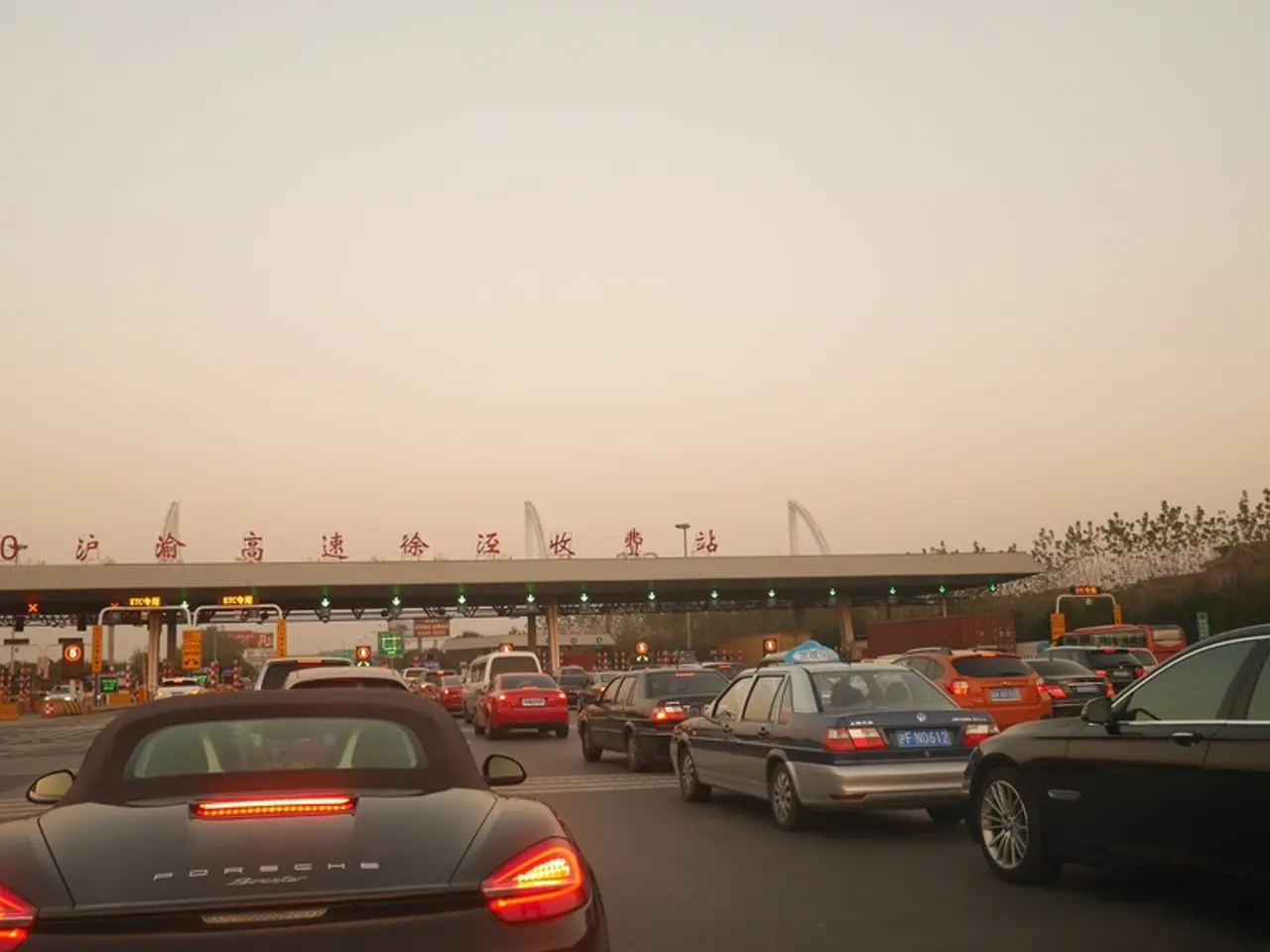
Penalties for Failing to Settle Toll Fees
In recent months, there has been no noticeable improvement or significant decline in the number of toll-related grievances, according to DECO, a consumer rights group in the country. This has put pressure on authorities to create a more user-friendly and equitable toll system for both regular commuters and occasional drivers.
DECO has expressed concerns about a lack of transparency in the current system and urges the government to consider revising the formula used to calculate fines. The public is particularly frustrated with the toll system, especially for drivers without a valid electronic pass or unaware of non-traditional payment procedures.
However, on a global scale, reforms are underway to address these very concerns. Many countries are moving towards more automated, efficient, and fair toll systems.
For instance, Malaysia is piloting a high-speed, barrierless toll system using Automatic Number Plate Recognition (ANPR) technology. This system scans vehicle number plates to automatically deduct tolls without requiring vehicles to stop or slow down. The goal is to transition to a nationwide multi-lane free flow (MLFF) tolling system by 2027.
New Zealand plans to pass legislation by the end of 2025 to facilitate road tolling and time-of-use charging. The reforms emphasize transparency and fairness by ensuring adequate consultation, community support, availability of untolled alternative routes, and legal protections for personal information collected during tolling.
In the United States, specifically Indiana, reforms are underway to create uniform tolling rules for highways, addressing fairness concerns such as "double taxation" (paying both fuel taxes and tolls). Indiana is exploring federal pilot programs and considers refunding fuel taxes to residents and truckers using tolled interstates to mitigate unfair cost burdens.
These efforts reflect a broader shift towards transparent, fair, and user-friendly toll payment systems. Reforms worldwide focus on replacing traditional toll booths with automatic, camera-based payment systems for user-friendliness and reduced congestion, implementing regulatory frameworks that require transparency, community consultation, and options for users, and addressing fairness issues like double taxation and ensuring toll revenues are efficiently managed and transparent.
In the country, a small decrease in the number of administrative offence proceedings against drivers with unpaid toll fees has been observed, with a 1.03% drop compared to 2023. This decline may be due to discount schemes on the SCUT roads in the previous year. However, DECO continues to receive a steady flow of complaints from motorists over toll-related fines.
In a positive development, tolls were removed from seven concessions as of January 2024, located in the country's interior and Algarve. Despite this, the number of infractions has slightly declined, with a 1.03% drop compared to 2023, equating to 8,478 fewer cases. Most of the infractions were linked to the former SCUT roads.
As the world moves towards more efficient and user-friendly toll systems, it is hoped that these reforms will address past concerns about lack of clarity, excessive penalties, and inconvenience, ultimately improving the driving experience for commuters everywhere.
The Algarve region in the country has witnessed the removal of tolls from seven concessions, potentially improving the driving experience for locals and tourists. On a global scale, the finance industry is increasingly focused on creating more transparent and equitable toll systems, with several countries, such as Malaysia and New Zealand, implementing reforms to address past concerns and discourage excessive penalties.