Nigeria Inaugurates Initial Industrial Biochar Plant for Reducing Carbon Pollution
In a significant stride towards addressing climate change and restoring soil health, Releaf Earth, a pioneering climate-tech startup, has launched Nigeria's first industrial-scale biochar carbon removal facility in Cross River State. This facility, equipped with Releaf's patented Kraken machine, has already processed over 10,000 metric tonnes of palm nuts, generating biochar-ready waste [1].
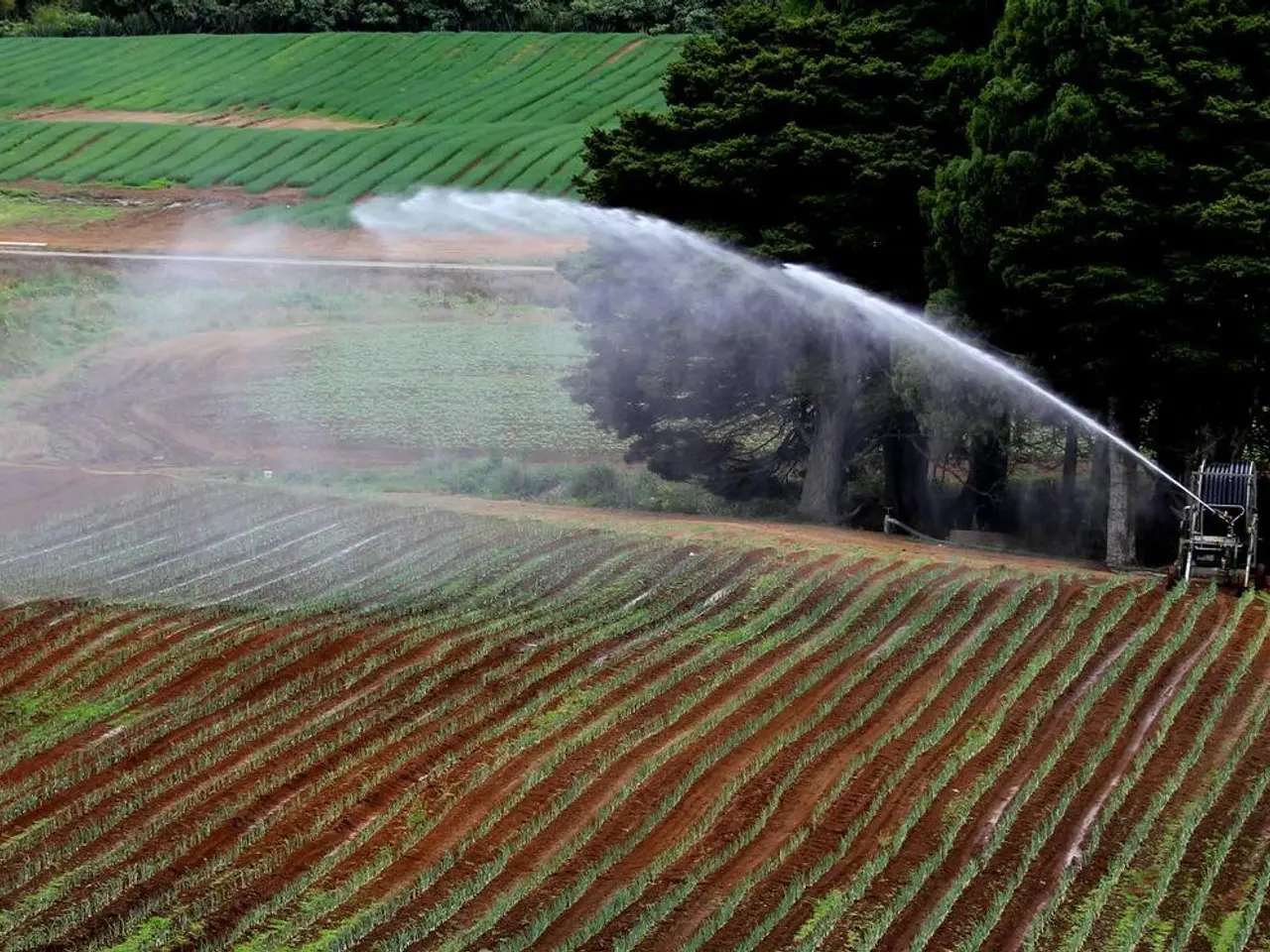
The biochar produced by Releaf Earth is aimed at enhancing carbon removal efforts and supporting sustainable agriculture. In a 2024 pilot in Cross River, the application of biochar resulted in a 23% increase in farm yields among participating smallholder farmers [2]. This improvement in agricultural productivity, combined with the earnings from carbon removal credits, sets a target to increase farmer incomes by more than 50% [2].
The biochar is actively transforming farmers' lands, suggesting positive effects on soil health through improved fertility and structure [4]. Future plans involve scaling biochar production and applications to bolster carbon sequestration—thereby contributing to climate change mitigation—and further improving smallholder farmer livelihoods through higher yields and income from carbon credits [2].
By integrating biochar into farming systems, Releaf Earth aims to enhance soil carbon storage while simultaneously supporting local economies and climate resilience. The facility aims to remove 40 kilotonnes of CO2e by 2030 and plans to scale to 100 kilotonnes [1].
Africa, with its abundance of agricultural waste and rural labor, is uniquely positioned to lead in carbon removal. Ikenna Nzewi, CEO of Releaf Earth, echoes this sentiment, stating that Africa has natural advantages to lead carbon removal globally. Tito Jankowski, CEO of AirMiners, asserts that Africa could become the most affordable and largest producer of biochar [3].
Biochar locks carbon in soil for thousands of years while improving crop yields and reducing fertilizer costs. The process also generates renewable energy, enabling off-grid deployment. Verified carbon credits will be issued via the Riverside Registry for Releaf's carbon removal efforts [1].
In addition, Releaf is developing tools to help other food processors evaluate biochar feasibility using existing agricultural infrastructure [5]. This initiative aims to expand the network of biochar facilities across the continent, with backing from Y Combinator, Breakthrough Energy Ventures, and others [6].
In summary, Releaf Earth's biochar facilities in Africa are operational and expanding, delivering measurable benefits in climate change mitigation via carbon removal, improved soil health through enhanced farm yields, and increased smallholder farmer incomes via productivity gains and carbon credit markets [1][2][4]. As the continent continues to scale its biochar production, it could lead the charge in carbon removal efforts, contributing significantly to global climate targets.
References: 1. Reuters 2. Bloomberg 3. AirMiners 4. Africa Renewables 5. Reuters 6. TechCrunch
- With the growing focus on environmental-science and climate-change, investments in Releaf Earth's business, which specializes in technology for carbon removal and sustainable agriculture, could yield profitable returns.
- The advancements in science and technology, as demonstrated by Releaf Earth's biochar facilities, are not only aimed at combating climate change but also at promoting finance opportunities in rural areas, such as by increasing farmer incomes.
- As Releaf Earthscale up their industrial-scale biochar production, the fusion of science, technology, and finance will create a ripple effect, potentially making Africa a prominent player in carbon removal and environmental-science initiatives.