
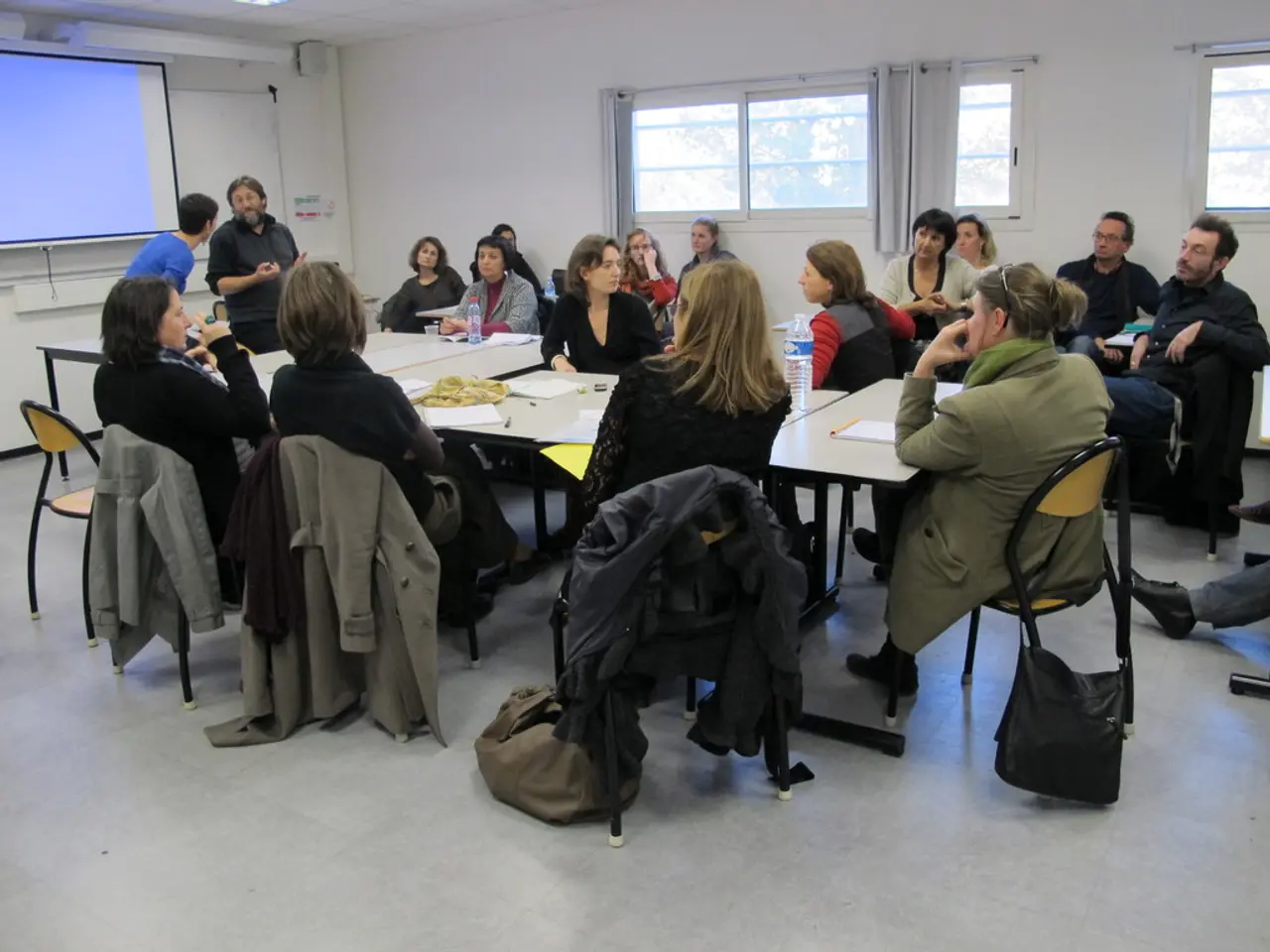
Leading Effective Groups and Organizations
In a new article published in the Harvard Business Review, Kelsey Doyle GSSB 2022 delves into the key considerations for building successful and inclusive teams, drawing on the work of Deborah Gruenfeld, a Professor of Organizational Behaviour at Stanford Business School.
Gruenfeld's research focuses on understanding group dynamics and decision-making, providing valuable insights into the effective management of teams. While specific teachings from her lecture "Managing groups and teams" were not directly detailed in the search results, her broader research offers some compelling points for team leaders.
One of the key considerations for building a successful team is diversity. Diverse teams, according to Gruenfeld, are capable of producing better decisions due to the variety of perspectives and experiences they bring. This diversity often leads to more innovative solutions as it includes a broader range of ideas and approaches.
However, managing diverse teams can come with its own set of challenges. Conflict and acrimony are common issues that managers should acknowledge and address. To ensure a more cohesive team, it's essential to go beyond superficial diversity, ensuring that deeper level perspectives and experiences are represented.
Another important aspect is the group dynamics and hierarchy. Hierarchy is a natural human inclination, as people often organize themselves into structures to coordinate and avoid conflict. Understanding how power and social organization influence behaviour can help in managing teams more effectively.
Effective leadership involves creating an inclusive environment where every member feels valued. This can be fostered by recognizing the contributions of all team members, regardless of their rank or position. Empowering team members to contribute and grow within their roles can enhance engagement and motivation, leading to a more successful team dynamic.
Practical strategies for building successful and inclusive teams include fostering open communication, promoting collaborative work, and addressing power imbalances. Encouraging open dialogue ensures that diverse perspectives are heard and valued. Structuring tasks that require collaboration across different ranks and backgrounds helps to leverage diverse strengths. Being aware of and managing potential power imbalances that might hinder team cohesion and effectiveness is also crucial.
Organizations need to attract and retain diverse talent to build successful teams. Clarity on deliverables is a key challenge in hybrid projects, and establishing communication norms is essential in such workplaces. Equal participation of all team members, including quieter members, should be ensured. Project management strategies are crucial for successful hybrid workplaces.
In conclusion, Deborah Gruenfeld's work highlights the importance of understanding group dynamics and power structures in building effective teams. By incorporating diversity and managing hierarchy effectively, teams can achieve better outcomes and foster a more inclusive environment. A high-performing team starts with a culture of shared values, and building such a team requires a balance between participation and control, avoiding micromanagement while setting clear objectives and structure.
- Financing a business can be facilitated by management teams that are built on the principles of diversity and effective leadership, as such teams often produce better decisions and more innovative solutions, leading to increased value for the organization.
- Career advancement in the field of business requires an understanding of group dynamics and power structures, as well as the ability to create an inclusive environment where diverse team members feel valued and empowered to contribute and grow.




