
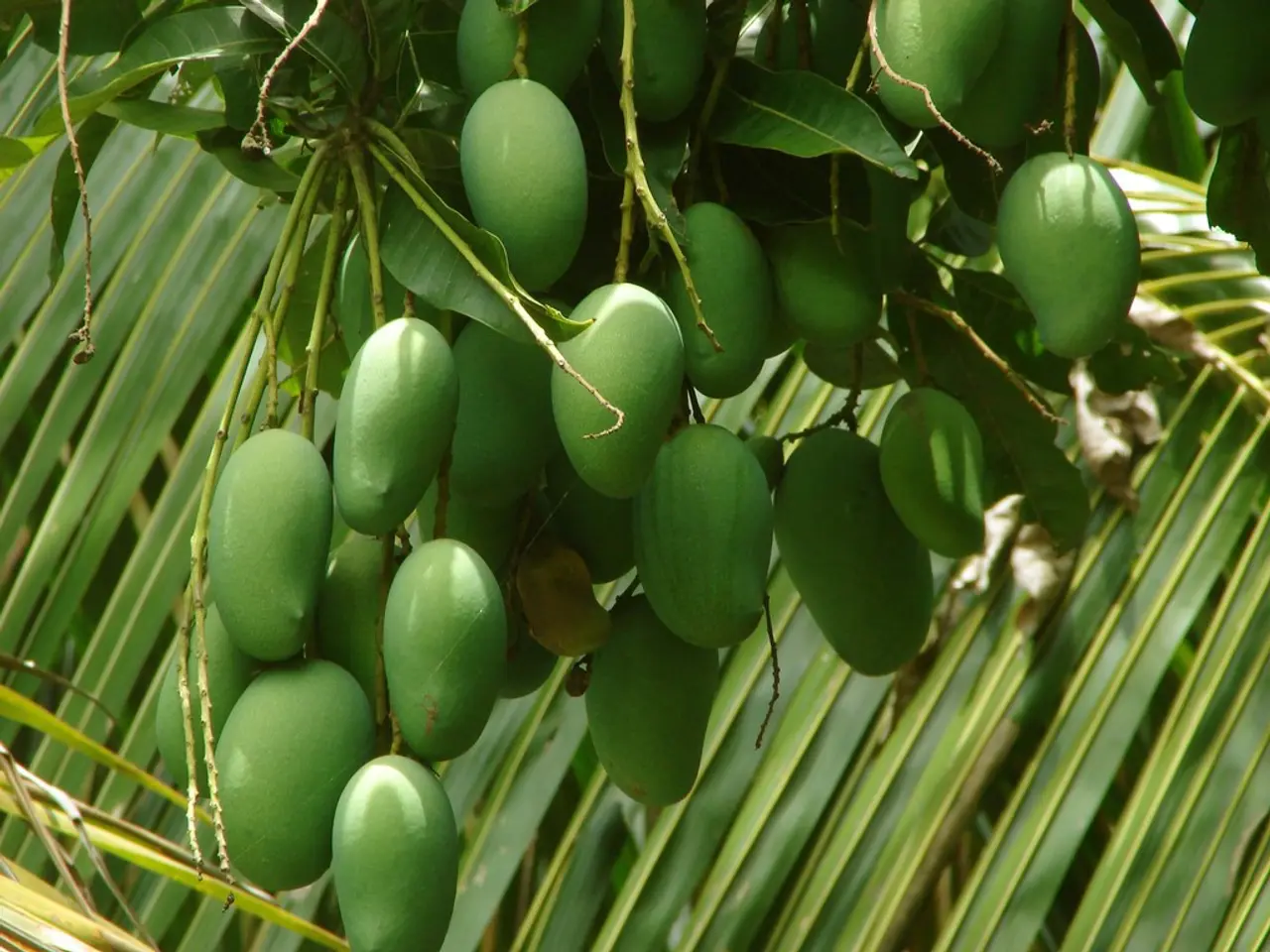
Instructions on Mango Cultivation for Inexperienced Farmers in India
In the heart of India, where the tropical climate meets fertile soil, lies a golden opportunity for first-time farmers: mango farming. This guide will walk you through the essential steps to set up a profitable mango farm in India.
Choosing the Right Location
The first step in successful mango farming is finding the perfect location. Mango trees thrive in a warm environment, with temperatures between 24°C and 30°C, and a clear dry season. Regions like Konkan, known for their tropical climate, are ideal for mango cultivation.
Quality Planting Material
Selecting high-quality mango varieties is crucial for the success of your farm. Grafted mango saplings mature more quickly and are more resistant to disease than seed-grown trees. Reputable nurseries offer superior seedlings, ensuring better yield and quality.
Preparing the Farmland
Preparing the farmland involves clearing the land, assessing soil quality, amending the soil as needed, increasing aeration and irrigation flow, and leveling the ground. The soil should be well-drained, sandy or loamy, and slightly acidic to neutral (pH 6-7).
Planting and Care
After preparing the soil, plant the mango saplings in well-spaced rows. Each tree requires plenty of sunlight, water, and a balanced supply of essential nutrients, including potassium, phosphorus, and nitrogen. Organic fertilizers like compost, vermicompost, and farmyard manure can boost soil fertility and structure.
Orchard Management and Pest Control
Regular care, including watering, fertilization, pruning, and protection from pests and diseases, is crucial. Common pests like aphids, fruit flies, and mealybugs can harm mangoes, while diseases like anthracnose and powdery mildew can impair yield. Adopting good horticultural practices and integrated pest management techniques can help keep mango trees healthy and producing high-quality fruit.
Marketing and Selling
To maximize profits, it's essential to identify the target audience and tailor strategies accordingly. Mango farming is a profitable business in India, particularly due to the country's status as the world's largest mango producer. Offering value-added products like mango pulp, jams, or dried mango can increase revenue and diversify income streams.
Considering Organic Farming
Commercial mango farming in regions like Konkan involves the integration of resource planning and can include organic practices for added market value. While carbon credit schemes for mango farmers have been attempted, farmers should not yet rely on these for income since promised payments have faced delays.
In Conclusion
A clear focus on quality planting material, suitable location, proper soil and climate conditions, good horticultural practices, and market awareness form the essential roadmap for a profitable mango farming business in India for newcomers. Routine soil testing can help identify nutrient deficiencies, ensuring your mango farm thrives and flourishes.
To ensure a successful business venture, first-time farmers should consider investing in a proper finance plan for their mango farm, as this will help manage the required expenses, such as purchasing quality planting material, preparing farmland, and maintaining the orchard over time.
In terms of farm management, adopting organic farming practices without relying solely on carbon credit schemes could bring added value to the farm, helping to attract eco-conscious consumers and premium prices.
For effective water management, it's important to irrigate the farmland efficiently, focusing on using the right amount of water to maintain the soil's moisture balanced while providing adequate irrigation flow for the mango trees. This will help save water resources and reduce costs, contributing to a more sustainable and profitable mango farm business.




