
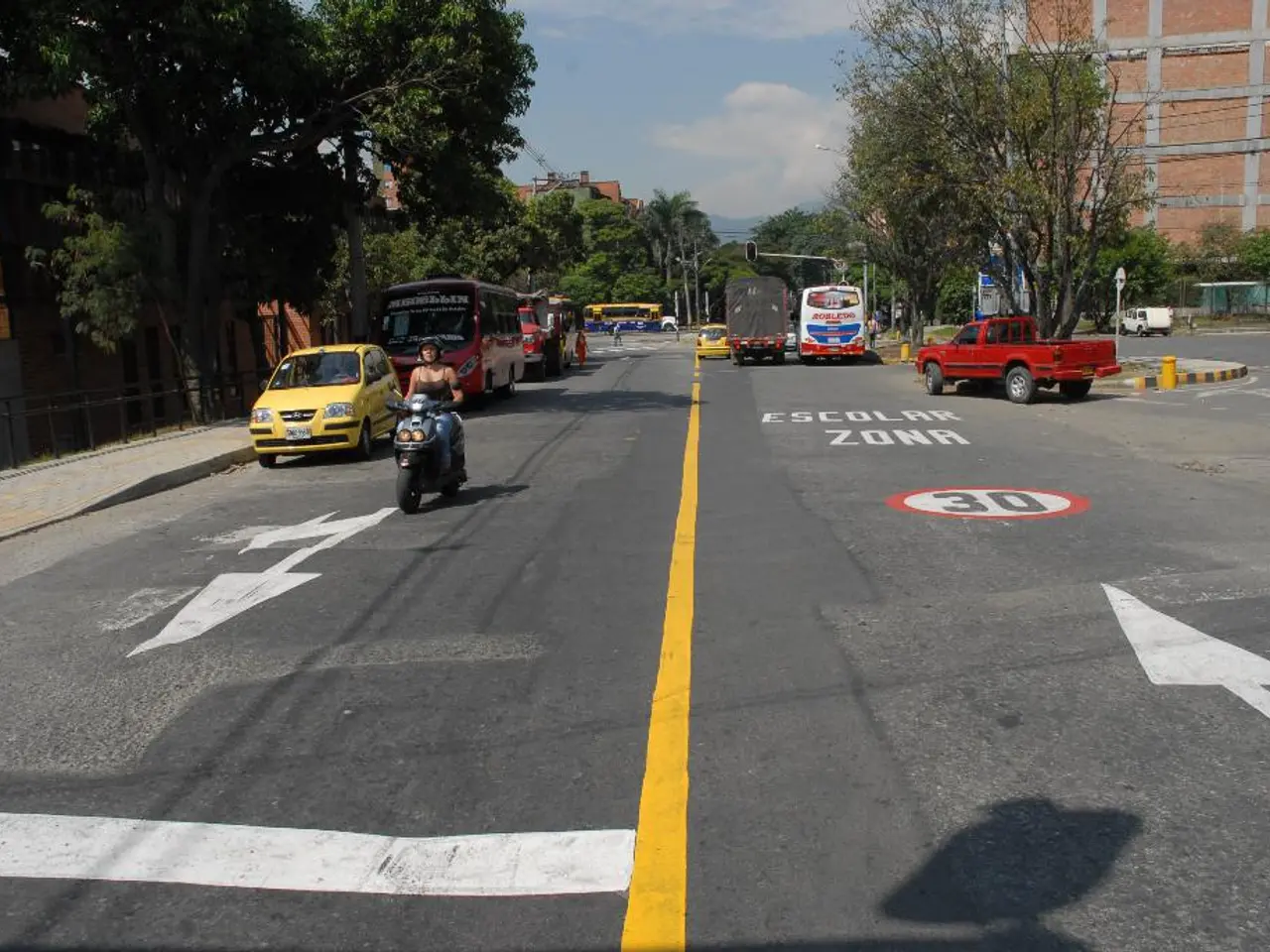
Construction zones on highways undergo rule updates from the Biden-Harris administration for safety improvements
The Biden-Harris administration has announced significant revisions to national highway construction zone safety regulations, aimed at enhancing safety and mobility in highway work zones. These updates align with the Federal Highway Administration's (FHWA) mission to advance the nation's transportation infrastructure and tackle increasing work zone crashes.
The updated Work Zone Safety and Mobility Rule and Temporary Traffic Control Devices Rule aim to curb accidents, ease traffic congestion, and safeguard construction workers. Acting Federal Highway Administrator Kristin White stated that the rule reflects years of collaboration to prioritize safety in work zones for travelers and workers alike.
The updates are the result of a proposal released in September 2023, which incorporated input from various stakeholders. Some key changes include:
- Updated standards for temporary traffic control devices such as cones, barrels, and signs to improve visibility and comprehension.
- Improved design standards for work zones that reduce worker exposure to traffic hazards.
- Measures to better control and reduce traffic speed in work zones.
- Enhanced training requirements for workers deploying and maintaining traffic control devices.
- Integration of new technologies and data collection to monitor and improve work zone safety dynamically.
The new measures mandate the use of positive protection devices, such as temporary concrete barriers, in high-speed traffic zones to safeguard construction workers from incoming vehicles. State transportation agencies are now required to integrate these comprehensive safety and mobility measures into their work zone management strategies.
Enhanced Work Zone Reviews are encouraged, with states being advised to conduct data-driven, programmatic reviews for a more comprehensive approach to safety. The FHWA will provide additional resources and outreach in the coming months to aid states and stakeholders in effectively adopting these new measures.
According to FHWA data, the majority of work zone fatalities involve drivers or passengers. The updates are designed to address this issue and improve overall work zone safety. The revisions to these rules are part of the Biden-Harris administration's response to the growing number of road projects funded by the Bipartisan Infrastructure Law.
For the latest specific regulatory changes by the Biden-Harris administration on this topic, it is recommended to consult the official U.S. Department of Transportation or Federal Highway Administration websites, or review the latest Federal Register notices on these rules.
The updates to work zone safety and mobility regulations are anticipated to extend beyond highway construction zones, potentially impacting other sectors such as finance and industry, given the potential for investment opportunities and operational efficiencies improvement in transportation infrastructure. Collaborative efforts to prioritize safety in work zones may also encourage industries to adopt similar safety standards in their operations to reduce accidents and improve overall productivity.




