
China initiates construction of contentious megaproject dam within Tibetan region - China initiates construction on contentious megadam within Tibetan territory
**China Begins Construction of Mega-Dam on Yarlung Tsangpo River Amidst Global Concerns**
China has embarked on a significant hydroelectric project, constructing a mega-dam on the Yarlung Tsangpo River, also known as the Brahmaputra in India. The ambitious project, located in Tibet's Nyingchi area, near the border with Arunachal Pradesh, India, involves the creation of five cascade hydropower stations. With an estimated investment of around 1.2 trillion yuan ($167.1 billion), the dam complex, if completed, could surpass the scale of the Three Gorges Dam, currently the world's largest.
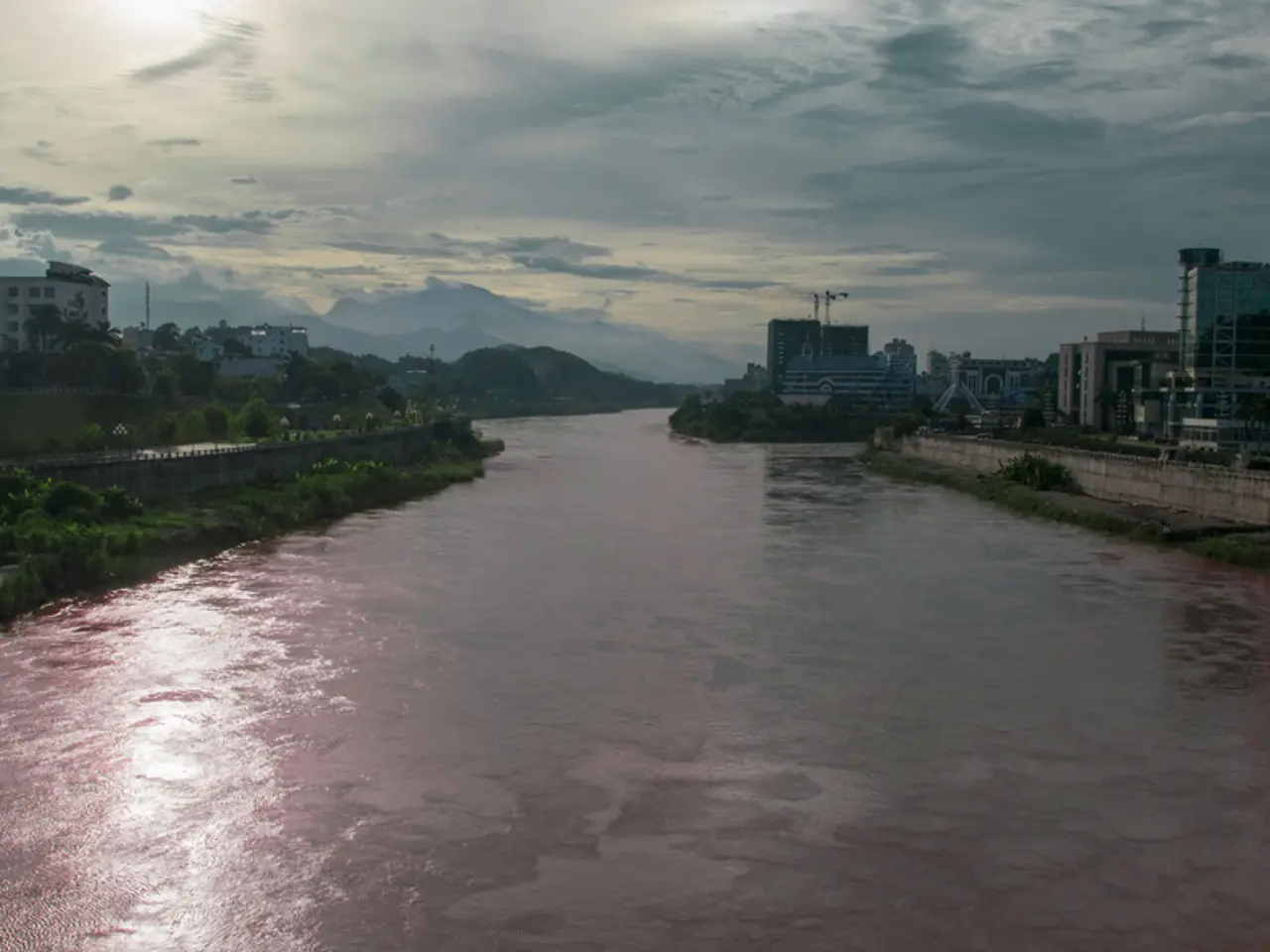
The Yarlung Tsangpo River, one of the world's longest rivers at around 3,000 kilometers, flows from the Himalayas in Tibet, through India, and Bangladesh, where it meets the Ganges and empties into the Bay of Bengal. The river's upper reaches, where the dam is being built, is a geopolitically and ecologically sensitive zone, home to a national nature reserve renowned for its biodiversity.
Environmentalists express concerns that dam construction in this area could cause irreversible ecological damage. Furthermore, downstream countries, particularly India and Bangladesh, depend heavily on the Brahmaputra for water, agriculture, and livelihoods. Alterations to the water flow, reduction in sediment transport, and impacts on fisheries and farming could pose a risk to millions of people living in these lower riparian regions.
The Himalayan region where the dam is located is seismically active, raising critical concerns about the safety and stability of such a massive infrastructure project. Any disruption could have catastrophic consequences downstream. However, China has not publicly acknowledged these risks.
India has expressed official concerns about the dam since its approval in late 2023, particularly over potential environmental and strategic threats to downstream flow and security. India has stated it will closely monitor the dam construction and take necessary measures to protect its interests. In January, India's Ministry of External Affairs urged the Chinese government to ensure that the interests of downstream areas around the Brahmaputra are not affected.
China denies that the dam construction will have any negative impact on downstream countries. Beijing emphasizes that the project aligns with its carbon neutrality goals and economic development efforts, dismissing international apprehensions as unfounded. The electricity generated will mainly be transmitted outside Tibet for domestic consumption within China while meeting local power needs in Tibet.
The dam's location near the contentious border with India in Arunachal Pradesh adds a geopolitical dimension, potentially complicating Sino-Indian relations further. India's characterization of the project as a potential "water bomb" underlines its concerns about water security linked to China's upstream control.
Despite the concerns, China continues to proceed with the project, maintaining dialogue with the affected states regarding the dam. The project has sparked criticism, particularly in India, with experts previously warning of a potential "water war" due to the dam. However, no other countries have joined India in criticizing the dam project.
As the construction of the dam progresses, both China and India remain vigilant, with each country emphasizing its commitment to protecting its interests and ensuring regional stability.
- In light of the ongoing construction of the mega-dam on the Yarlung Tsangpo River, the Commission has also been consulted on the draft regulation on the implementation of the common fisheries policy, as changes in the river's flow could impact fisheries and, consequently, the industry and livelihoods of downstream communities.
- Considering the enormous financial and energy investment in the dam project, the environmental science community is concerned about the potential climate-change implications, as massive hydroelectric projects can alter hydrological cycles and contribute to greenhouse gas emissions.
- With China denying any potential negative impacts on downstream countries and emphasizing the dam's alignment with its carbon neutrality goals, the finance sector is closely monitoring economic factors related to the project, as potential disruptions or changes in water flow could influence energy demands, trading, and investments within the region.