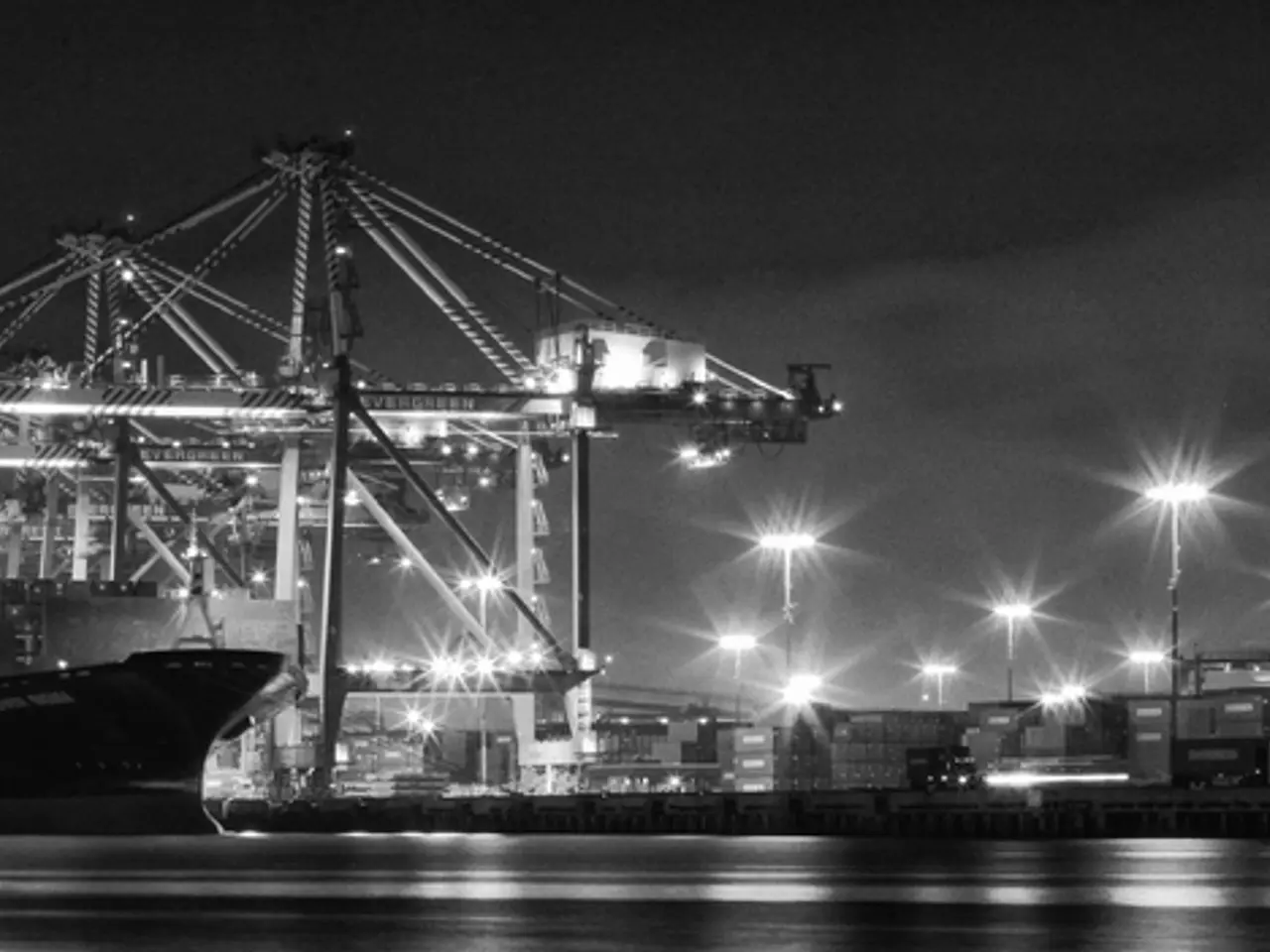
Bremen's economic strain persists unabated
In the summer of 2025, the economy of Bremen finds itself grappling with a series of challenges. The industrial sector, particularly steel production, is under pressure due to competitiveness issues, high energy costs, and the need for green transformation.
The University of Bremen and stakeholders have emphasized the importance of local solutions to the transformation of the steel industry, with projects like the hyBit hydrogen initiative at the forefront. This initiative underscores the need for early decisions and investments towards a hydrogen infrastructure for greener industrial processes.
At a broader German level, reducing industrial electricity prices and transmission charges is considered essential to maintain competitiveness. The political urgency to improve industrial electricity pricing models and reduce network fees could translate into lower location costs for manufacturing and heavy industry like steel production.
While specific bureaucratic reform measures for Bremen are not explicitly stated, the emphasis on efficient industrial symbiosis, linking energy and material flows, and creating a resilient value chain indicates a political direction towards reducing inefficiencies that could include bureaucracy reduction and streamlining processes to foster investment and location attractiveness.
The business climate in Bremen's hotels and restaurants remains tense, with the current situation still difficult and characterized by declining turnover. The IHK business climate indicator improves slightly to 57 points, although this is significantly below the ten-year average of 71.
The economy in Bremerhaven is approaching investments and personnel adjustments with slightly less restraint. However, the location conditions must become more attractive with concrete political measures such as reducing bureaucracy and lowering location costs.
High bureaucracy requirements, increasing labor costs, and weak domestic demand are hindering economic recovery in Bremen. The IHK business climate indicator for Bremen's economy remains at 80 points, well below the ten-year average of 97 points. Companies in Bremen continue to be cautious about their investments and personnel planning.
The export-oriented industry is a key driver of the Bremen economy, and the cautious export expectations are due to uncertain development of world trade and lack of competitiveness of the economic policy framework conditions. Industry sentiment in Bremen has significantly deteriorated, with both domestic and foreign businesses reporting lower order intakes.
The decline in export expectations is burdening the industrial economy in Bremen. The manufacturing industry's business climate index drops significantly to 68 points, well below the ten-year average of 98 points. Wholesale and foreign trade remain in a difficult situation, with the business climate index for wholesale and foreign trade at 74 points and remaining well below the ten-year average of 87 points.
Other services assess the current business significantly worse than before, with the number of new orders decreasing again in the second quarter. The business climate index drops slightly to 84 points and remains well below the ten-year industry average of 107 points.
Transport and logistics companies report a slightly improved business situation, but negative expectations still prevail. The business climate index increases slightly to 84 points (average: 95). The economy in Bremerhaven, particularly in retail, logistics, and some service sectors, has improved compared to Bremen. Retail shows a slight recovery, with the business climate index for retail increasing significantly to 104 points (average: 89).
However, the construction industry continues to struggle, with the IHK business climate indicator for the construction sector in Bremen falling slightly, with companies again receiving fewer new orders. Economic development is under pressure, especially in the industrial and construction sectors in Bremen.
Dr. Matthias Fonger, CEO of the Chamber of Commerce, states that Bremen's economy continues to face many challenges. Overall, companies remain cautious with their investment and personnel plans in Bremen. For specific political measures, more targeted regional policy documents or local government announcements would be needed.
- In their pursuit to improve Bremen's economy, stakeholders recognize the need for early investments in hydrogen infrastructure for greener industrial processes, such as the hyBit hydrogen initiative, given the pressure the steel industry faces in the local finance sector due to competitiveness issues, high energy costs, and the need for green transformation.
- With the export-oriented industry being a key driver of Bremen's economy, political measures to streamline processes, reduce bureaucracy, and lower location costs could foster investment and location attractiveness, potentially addressing high bureaucracy requirements, increasing labor costs, and weak domestic demand that are currently hindering economic recovery in Bremen.