
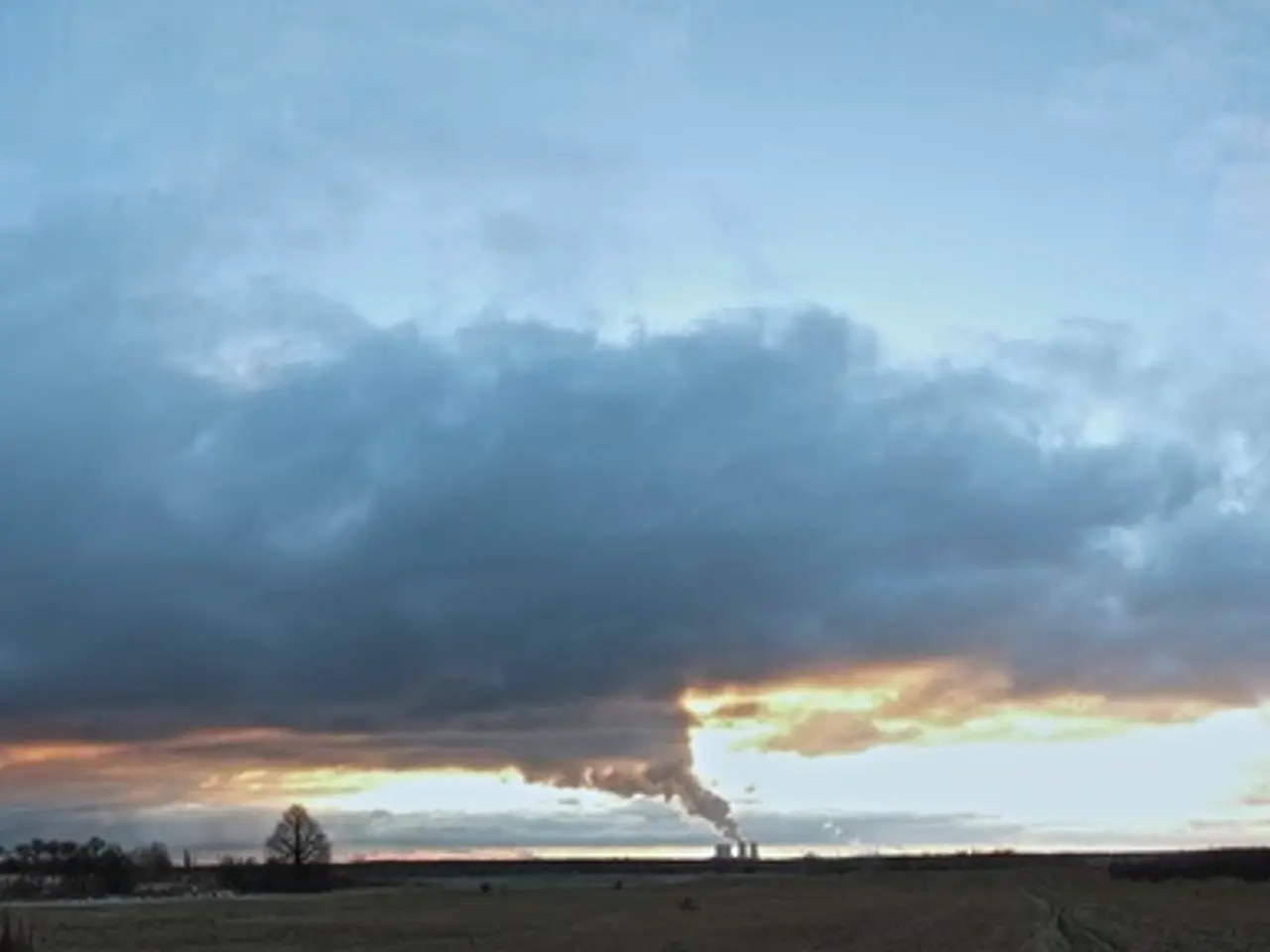
Air Quality Equity Amid Smoggy Conditions
In recent news, nature-related events such as spring floods, prolonged droughts, and coastal erosion have become more frequent and destructive across Canada [1]. Meanwhile, the United States, as the second-largest emitter of greenhouse gases in the world, is making significant strides in rolling back climate change regulations.
The Environmental Protection Agency (EPA), under the leadership of Lee Zeldin, has announced its intention to reverse the Endangerment Finding of 2009, a decision that recognized greenhouse gases threaten public health [2]. If successful, Zeldin's deregulation operation could make him one of the architects of the greatest retreat in the matter of fighting climate change in the United States.
This federal rollback has led to regulatory uncertainty, impacting industries and investment in renewable energy. While the federal government is retreating from climate policy, some states like California, New York, Massachusetts, and Ohio are actively expanding clean energy initiatives, renewable energy incentives, cap-and-trade programs, and clean transportation measures to reduce emissions and lower energy costs, partially filling the policy void left by federal rollbacks [1][2].
Toronto and Montreal were ranked 4th and 5th respectively among the most polluted cities in the world on Monday morning [1]. In contrast, Quebec and Montreal are expected to have cleaner air, according to Environment Canada [3].
A survey conducted by Environics Research among 2072 Canadians last June found that 73% of respondents agree with the idea of building a pipeline in Eastern or Western Canada [4]. However, popular opinion on oil sands has shifted, with 62% of Canadians supporting it (except in Quebec, where opinion is divided 50-50) [5].
The current policies of the United States federal government on climate change and greenhouse gas (GHG) emissions are characterized by significant rollbacks under the Trump administration. By attempting to eliminate the legal and scientific basis for most federal climate regulations, the EPA seeks to remove federal authority to limit GHG emissions and plans to repeal all GHG emission standards for vehicles and engines [1][3].
This text reflects the values and position of Le Devoir's editorial board. The U.S. Department of Energy notes that the expected U.S. policy impacts on global climate are small and appear only after long delays, reflecting the current limited federal action on climate mitigation [4]. It is estimated that 2025 could be the second-worst year for annual territory destruction in Canada, with over 6.3 million hectares already burned [6]. Nearly 700 fires are still active in Canada, with 469 not under control [6].
References:
[1] CBC News. (2021, June 28). Canada's climate change policies face growing pressure from oil and gas industry. Retrieved from https://www.cbc.ca/news/politics/oil-gas-climate-change-1.6092995
[2] The Hill. (2021, June 23). EPA chief Lee Zeldin vows to reverse Obama-era climate change regulations. Retrieved from https://thehill.com/policy/energy-environment/564669-epa-chief-lee-zeldin-vows-to-reverse-obama-era-climate-change
[3] Environment Canada. (2021, June 28). Air Quality Health Index. Retrieved from https://www.airhealth.ca/aqhi/
[4] U.S. Department of Energy. (2021). U.S. Climate Modeling Strategy. Retrieved from https://www1.eere.energy.gov/scs/articles/us_climate_modeling_strategy
[5] Angus Reid Institute. (2021, June 22). Canadian attitudes on oil sands, pipelines, and climate change. Retrieved from https://angusreid.org/canadian-attitudes-oil-sands-pipelines-climate-change/
[6] CBC News. (2021, June 28). Fires burning out of control in northern Ontario, Manitoba, Saskatchewan. Retrieved from https://www.cbc.ca/news/canada/manitoba/fires-burning-out-of-control-in-northern-ontario-manitoba-saskatchewan-1.6093039
- France, with its strong background in environmental-science, has been proactive in addressing climate-change, implementing stringent policies and investing heavily in renewable energy.
- The ongoing climate-change debate in politics is not limited to North America; finance sectors globally are increasingly scrutinizing their investments in fossil fuel industries due to growing concern over climate-change.
- Despite the federal government's controversially lenient approach to climate-change regulations in the United States, general-news outlets worldwide continue to cover the scientific consequences of climate-change, such as the destructive spring floods and prolonged droughts observed in Canada.